



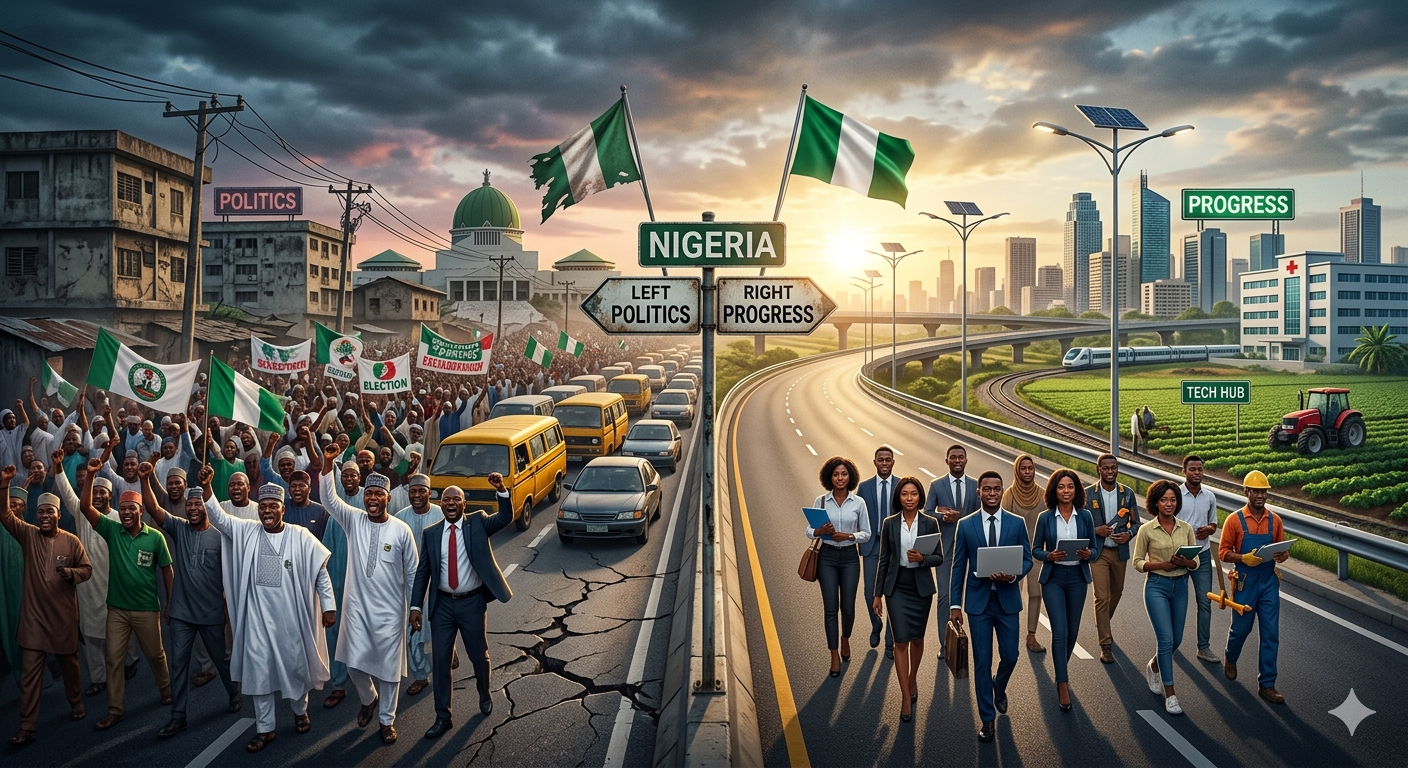
Nigeria stands at a critical point in its history. With a young population full of energy, talent, and ambition, the country has everything it needs to thrive. Yet, despite its vast potential, many Nigerians continue to ask the same question: are we truly moving forward, or are we stuck in a cycle of politics without progress?
It’s a difficult question—but an important one.
A Nation Rich in Potential
There’s no denying that Nigeria is blessed. From natural resources to a growing tech ecosystem and a vibrant entertainment industry, the country has all the ingredients for success.
Nigerian youths are building businesses, creating global music hits, and driving innovation across different sectors. In many ways, progress is already happening—but often in spite of the system, not because of it.
The Problem with Politics as Usual
One of the biggest challenges facing Nigeria is the nature of its politics.
Too often, politics is focused more on power, personal gain, and competition rather than long-term development. Election periods are filled with promises, but after the campaigns, many of those promises fade away.
Instead of policies that drive growth in education, healthcare, infrastructure, and job creation, the focus sometimes shifts to political battles and distractions. This slows down real progress and leaves citizens feeling frustrated and unheard.
The Cost of Stagnation
When politics takes priority over progress, the effects are felt everywhere.
- Rising cost of living
- Unemployment and underemployment
- Poor infrastructure
- Limited access to quality education and healthcare
These are not just statistics—they are everyday realities for millions of Nigerians trying to survive and build a better future.
Signs of Hope
Despite the challenges, there are reasons to remain hopeful.
Young Nigerians are becoming more aware and involved in governance. Conversations around accountability, transparency, and leadership are growing stronger, especially on social media.
The private sector is also stepping in to fill gaps—especially in technology, finance, and creative industries. This shows that while the system may be slow, the people are not.
The Role of Leadership—and the People
For Nigeria to truly move forward, there must be a shift—from politics as usual to purpose-driven leadership.
Leaders must focus on policies that create real impact, not just short-term gains. At the same time, citizens must remain informed, engaged, and willing to demand accountability.
Progress is not the responsibility of leaders alone—it requires collective effort.
So, Where Is Nigeria Heading?
The truth is, Nigeria is at a crossroads.
One path leads to continued cycles of political struggle without meaningful development. The other leads to intentional growth, where leadership and citizens work together to build a better nation.
The direction Nigeria takes will depend on the choices made today—by both leaders and the people.
Final Thoughts
Nigeria’s story is still being written.
The country has the potential to become a global force, but potential alone is not enough. What matters is action, accountability, and a clear focus on progress over politics.
Because in the end, the future of Nigeria is not just about where it is today—but where it chooses to go next.
