



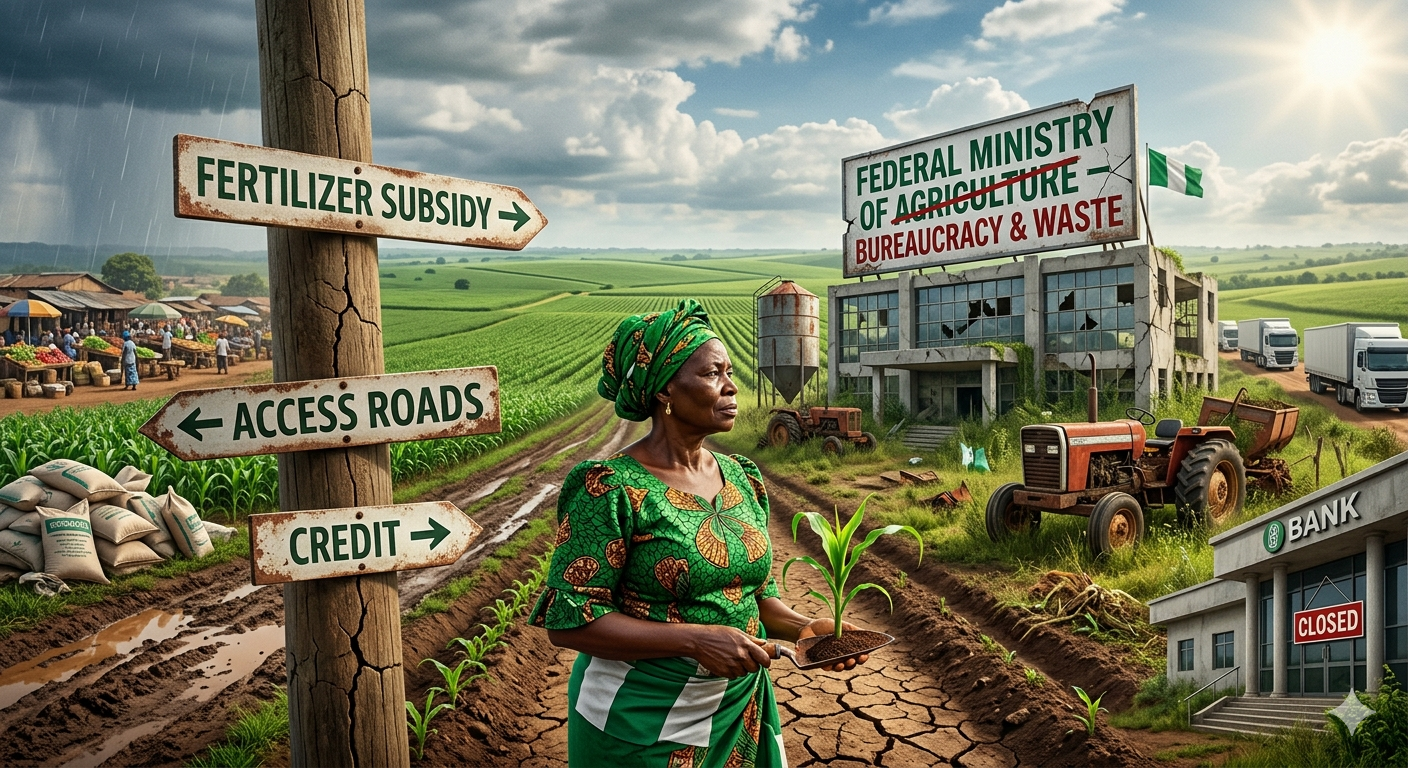
Nigeria is often described as a country blessed with fertile land, favorable climate, and millions of hardworking farmers. With vast agricultural potential, one would expect the nation to be self-sufficient in food production. Yet, the reality tells a different story.
So, why can’t Nigeria feed itself?
The answer goes beyond just farming—it’s a deeper issue rooted in structure, policy, and priorities.
A Land Full of Promise
From the rich soil in the Middle Belt to the vast plains in the North and the coastal farming regions in the South, Nigeria has what many countries lack—natural agricultural advantage.
Crops like rice, cassava, maize, and vegetables can grow in abundance. In fact, Nigeria is already one of the largest producers of some of these crops in Africa.
But producing food is one thing—efficiently distributing and sustaining it is another.
The Real Problem: Poor Systems, Not Poor Soil
The biggest challenge facing agriculture in Nigeria is not the land—it’s the lack of structure and support systems.
Many farmers still rely on outdated methods. Mechanized farming is limited, and access to modern tools, quality seeds, and fertilizers remains a struggle for small-scale farmers.
Without proper investment in modern agriculture, productivity stays low—even when the land is fertile.
Insecurity in Farming Regions
Another major issue is insecurity.
In many parts of the country, especially in key farming areas, farmers face threats that prevent them from accessing their land. This leads to abandoned farms, reduced harvests, and ultimately, food shortages.
When farmers cannot farm safely, the entire food supply chain is affected.
Post-Harvest Losses: Food Wasted, Not Shortage
One of the most overlooked problems is post-harvest loss.
A significant portion of food produced in Nigeria never makes it to the market. Poor storage facilities, bad roads, and lack of transportation cause food to spoil before it reaches consumers.
This creates an artificial shortage—food exists, but it doesn’t get to where it’s needed.
Over-Reliance on Imports
Despite local production, Nigeria still depends heavily on food imports.
This weakens local agriculture, as imported goods often compete with locally grown produce. Instead of strengthening internal systems, reliance on imports continues to grow.
Lack of Consistent Government Policies
Agriculture needs long-term planning, but policies in Nigeria are often inconsistent.
A new administration may introduce programs, only for them to be abandoned or changed later. This lack of continuity discourages investment and slows down growth in the sector.
The Way Forward
Nigeria has everything it needs to feed itself—but it must fix the systems behind agriculture.
- Invest in modern farming techniques
- Improve security in rural areas
- Build better storage and transportation systems
- Support local farmers with funding and training
- Create stable, long-term agricultural policies
These steps can transform agriculture from survival-based farming into a powerful economic engine.
Final Thoughts
Nigeria’s inability to feed itself is not due to lack of resources—but lack of structure, consistency, and execution.
The land is ready. The people are willing.
What’s missing is a system that connects everything together.
Until that changes, the question won’t be whether Nigeria can feed itself—but why it still hasn’t.
